TONGAL
Brands repeatedly fund open creative work.
Historical Tongal-reported metrics
200,000independent creators
168countries
$61M+earned by community
SPORA — INVESTMENT REFERENCE
September 2026 · Confidential
Historically, meaningful production was expensive. Organizations usually had to predict capability before they could observe it: identity, credentials, search, interview and hiring all came before the outcome. That sequence makes sense when trying is costly. It also means selection depends heavily on claims, proxies and access.
AI makes it cheaper for more people to produce enough of the actual work to demonstrate a direction. Spora gives organizations a structure for opening bounded work, organizing the field, selecting from observable proof and moving the right people into paid continuation. An organization uses a private Workspace to operate that workflow and a branded Open Surface to expose multiple bounded Opens over time. The initial contribution is evidence—not a substitute for the deeper engagement.
Traditional marketplaces start with people.
Spora starts with the work.
The work becomes the matching mechanism.
TONGAL
Historical Tongal-reported metrics
WAZOKU / INNOCENTIVE
HEROX
TIKTOK BRANDED MISSION
99DESIGNS
ADARENA · DEEL
in visible fixed project budgets across ten past project cards, plus two additional open-bid past projects, two current project cards and the real Fragrance Trifecta project.
The behavior is not new. The economic conditions are.
DEMONSTRATING CAPABILITY ↓
93%say creative AI helps them produce faster
58%say competing with larger teams or studios feels stronger
35%say AI gives more freedom to experiment before pitching
AI does not make everyone equally capable. It lowers the cost of turning taste, direction and context into something observable: a video treatment, rough sequence, prototype, working software slice, visual direction or sample analysis.
Adobe 2026 Creators’ ToolkitEVALUATING CAPABILITY ↓
Wazoku’s current AI product is a direct precedent for turning a high-volume submission field into a smaller, better-structured decision surface. Human judgment still decides what deserves to move forward.
Wazoku AIFOUNDER THESIS · LATENT CAPABILITY
Capability has always been more distributed than opportunity. AI makes it cheaper for people with taste, context and direction to demonstrate what they can do. It amplifies internal teams and independent outsiders alike. Spora’s bet is that organizations benefit from access to many independent perspectives amplified by AI.
Open work existed before AI. AI may make it cheap enough to become continuous infrastructure.
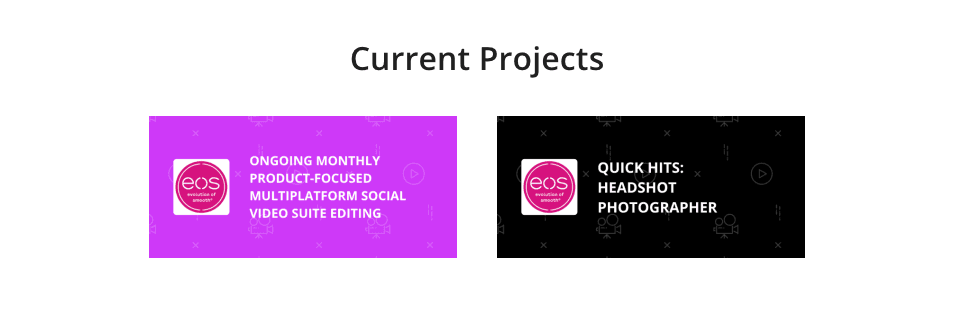
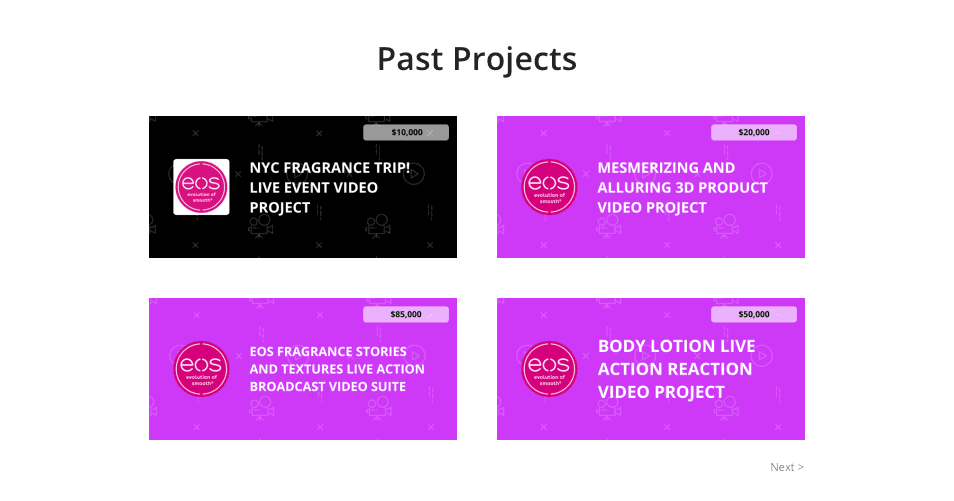
Snapshot checked September 6, 2026. Open-bid projects excluded from the $317K total. This is “$317K in visible fixed project budgets,” not a claim that Tongal describes the number as total spend. Open live Tongal source
ONE REAL PROJECT
FRAGRANCE TRIFECTA SOCIAL VIDEO SUITE
 FRAGRANCE TRIFECTAOPEN
COMMUNITY CONTRIBUTIONS
The underlying EOS/Tongal project and campaign assets are real. The native Spora concept above shows how the same behavior could operate through Spora. EOS is not a Spora customer.
| System | Persistent workflow | Organization-owned surface | Proof before engagement | AI-organized abundance | Paid continuation | Portable cross-company proof |
|---|---|---|---|---|---|---|
| Tongal | yes | limited | yes | limited | yes | vertical |
| Wazoku / HeroX | yes | partial | yes | partial | limited | vertical |
| TikTok | yes | platform-specific | yes | limited | partial | platform-specific |
| 99designs | yes | limited | yes | limited | yes | vertical |
| AdArena | yes | platform-specific | yes | partial | limited | vertical |
| Pond | yes | no | yes | yes | limited | platform-specific |
| Spora — proposed architecture | proposed | proposed | proposed | proposed | proposed | proposed |
Conservative architecture comparison based on public product descriptions. “Limited,” “partial,” “vertical” and “platform-specific” are directional judgments, not vendor claims. The architecture is proposed; adoption, economics, recurrence and network effects remain unproven.
THE WINDOW IS OPENING · AUGUST 2026
On August 10, 2026, Upwork announced its MCP server: agents can initiate human hiring workflows, including job posts, talent shortlists and draft offers. Upwork also reported seeing agents attempt to access talent on users’ behalf. This is evidence of agent-facing labor infrastructure and a vendor-reported demand signal—not adoption scale or proof of Spora’s economics.
Upwork exposes established hiring workflows to agents. Spora’s proposed inversion is to observe an attempt at the work before selecting a person for deeper paid engagement. This is a difference in the selection sequence, not a claim that every Upwork engagement starts with a résumé.
Upwork announcement · August 10, 2026POND — INDEPENDENT CONVERGENCE · JULY 2026
Pond publicly describes itself as an agentic task marketplace where humans and AI agents compete against posted tasks, customers review completed work, and accepted results are paid. Completed tasks also build platform reputation.
What it supports: Work-first markets are independently emerging as AI reduces execution cost and enables parallel attempts.
What it does not prove: Organization-owned surfaces, audience-led cold starts, staged paid progression or portable cross-organization work history.
Funding context: Archetype’s November 2024 announcement says Pond’s $7.5M seed supported a crypto-native AI model layer. The current task-marketplace positioning is a later public direction; the financing should not be presented as validation of the current marketplace.
Spora does not invent open participation. It generalizes it into organization-owned infrastructure and lets demonstrated capability accumulate across organizations.
The first contribution should be minimum-sufficient evidence: enough to reveal a direction, decision, treatment or working slice. It is not universal unpaid production. Once an organization asks for material revision, deeper context, private assets, production labor or exclusive use, the work crosses into paid continuation.
The boundary matters to both sides. Organizations can observe something closer to the work before committing deeply. Contributors can decide whether a bounded attempt is worth making, while meaningful additional labor, production and rights remain explicitly compensated.
PROPOSED PRODUCT BOUNDARY
Contributors bring their tools; organizations bring their agents. Spora structures Opens, contributions, permissions, review state, selections, engagements, rights, payments and outcomes. Organizations can inspect contributions with the frontier models they choose. Spora does not require proprietary evaluation intelligence.
Future implication: an authorized organizational agent can create an Open within delegated permissions. People retain authority over consequential selection, rights, spend and approvals. This is an architectural direction, not a claim that autonomous Opens are available today.
PROPOSED CONTRIBUTION BOUNDARY
A contribution gives permission to evaluate, not permission to use. Each Open should state what evaluation permits. Commercial use, exclusive rights, material revisions and deeper bespoke production move into paid continuation through an engagement, license or commission. These are proposed product terms; the final agreements and their implementation remain to be designed.
BOUNDED PARTICIPATION
Each Open can set eligibility, submission limits, formats, required evidence, deadlines and private or invite-only stages. Those boundaries apply to every attempt, including AI-assisted work. Organizations can use their chosen agents for duplicate detection, clustering, requirements checks, summaries and provenance or anomaly flags where appropriate. People retain authority over consequential selection, rights and spend.
HISTORICAL STAGED-PAYMENT PRECEDENT
99designs similarly supports paid one-to-one projects with a contest winner or finalist after the contest. Official follow-on workflow
TRADITIONAL MARKETPLACE
Acquire supply ↔ acquire demandSPORA
Customer brings demand + customer can bring first supplynike.com/open
artist.com/create
game.com/build
startup.com/open
ORGANIZATION-OWNED ≠ ISOLATED
Proposed architecture: the organization controls its branded Open Surface and domain, audience relationship, briefs, private assets and context, requirements, rubrics, private review material, permissions and access to deeper stages. Its private Workspace is where it operates Opens and reviews contributions. It controls the rights it actually purchases or licenses. Spora powers the workflow and maintains the underlying work and economic record.
The contributor controls their identity, participation across organizations, work until rights are transferred or licensed, and what permissioned proof they expose. Portable proof records an event; it need not disclose confidential work.
Illustrative example: Jordan may carry permissioned proof that Nike shortlisted, paid, commissioned or rehired Jordan, or shipped work with Jordan, without exposing the confidential brief or submission to Adidas.
CANONICAL EVENT MODEL · PROPOSED
Open → Contribution → Review → Selection → Paid Continuation → Outcome. Spora maintains the connected record: contribution events, brief and asset versions where appropriate, contribution status, shortlists, selections, engagements, licenses, commissions, agreements, payments, collaborations, repeat relationships and shipped outcomes. Engagements, licenses, commissions and payments can sit within paid continuation. Permissions and visibility attach to each record.
A record may be private, permissioned, disputed, revoked or no longer publicly visible. Retention, deletion, verification, disputes and privacy rules remain product and contractual design questions. Maintaining a record does not make every event permanently public.
PERSISTENT OPEN SURFACE, BOUNDED WORK
An Open is an organization-authorized invitation to attempt specific work under stated terms. The organization can maintain a persistent branded Open Surface containing multiple Opens. Because the surface persists while its Opens change, contributors can return to participate in new work over time. Every contribution belongs to a specific Open, which defines welcome work, context/assets, requirements, evaluation criteria, submission format, eligibility, limits, rights terms, deadline/status and the path into paid work.
Illustrative Open Surface: eos.com/open could hold separate Opens for UGC/product reactions, short-form video, AI-native commercials, fragrance concepts, photography and packaging. A launch brief can close on a deadline while a product-reaction Open stays available. The organization chooses what it will receive and evaluate.
The Open remains the fundamental object. It establishes consent to receive a defined kind of work; a persistent surface is not an unrestricted unsolicited-submission inbox. The surface can stay open. The work stays bounded.
FROM OPEN SURFACES TO A NETWORK
Spora starts by powering real organization-owned demand. As those Opens accumulate, it can index the live Opens their organizations make discoverable. Contributors could browse work across brands, studios, startups and artists, with every attempt subject to that Open’s rules and limits. The broader marketplace grows from activity already happening through those Open Surfaces.
Customer #1 can benefit before a large Spora network exists. The first supply can come from the organization’s audience plus relevant contributors deliberately invited by Spora. White-glove recruitment is compatible with this model; later, demonstrated work history may support network-routed participation.
For each contributor, record one acquisition channel: audience distribution, organization invitation, Spora invitation or future network routing. Record prior audience membership separately. Compare contribution volume, shortlist rate, paid conversion and quality by channel and audience affiliation; attribute repeat visits consistently to the original acquisition channel.
Each organization can operate its own market. Permissioned history can connect them.
KNOWN / EVIDENCED
SPORA MUST PROVE
A recorded selection or payment is a verifiable event. Repeated events can become interpreted reputation; useful cross-organization prediction is a further hypothesis. Preserve who decided, what work was evaluated and what happened afterward rather than treating every paid event as universal proof of ability.
These are the exact bets the investment funds.
FOUR VALID SUCCESS PATHS
An Open can lead to another Open; one contributor can become a repeat paid collaborator; complementary contributors can form a team that ships; or existing collaborators and new contributors can join the next project. Each is a valid success path.
If an organization finds a great contributor and leaves Spora permanently, discovery worked—but platform retention and monetization did not. Measure return to paid allocation through Spora separately from downstream relationship success. Count returning organizations within a defined cohort window, and track the type, value and outcome of each paid continuation.
After discovery, the intended recurring value is paid continuation through engagements, private stages, revisions, agreements, licenses, commissions, payments and outcome history. Existing collaborators can work alongside new contributors on later Opens. Whether organizations keep that work in Spora remains a retention hypothesis.
TEST CAMPAIGN AND ALWAYS-ON OPENS
Test whether a portfolio of bounded Opens increases contribution quality, organizational frequency, repeat paid allocation and retention. Compare campaign and always-on cohorts by qualified contributions, review time, paid conversions, returning organizations and dollars allocated over a defined period. An Open staying available is not evidence that anyone returns or gets paid.
01Repeat Open rate
02Review time
03Qualified contribution rate
04Preview → shortlist, by source
05Shortlist → paid, by source
06Paid work reaching production
07Contributor return rate
08Dollars routed to contributors
09Cross-organization contributor movement
10Returning organization rate
11Repeat paid collaborations
12Paid licenses and commissions
13Paid engagements
14Teams formed and shipped outcomes